Introducing Risk Reports: Identify Key Contract Risks in Minutes
What Are Risk Reports?
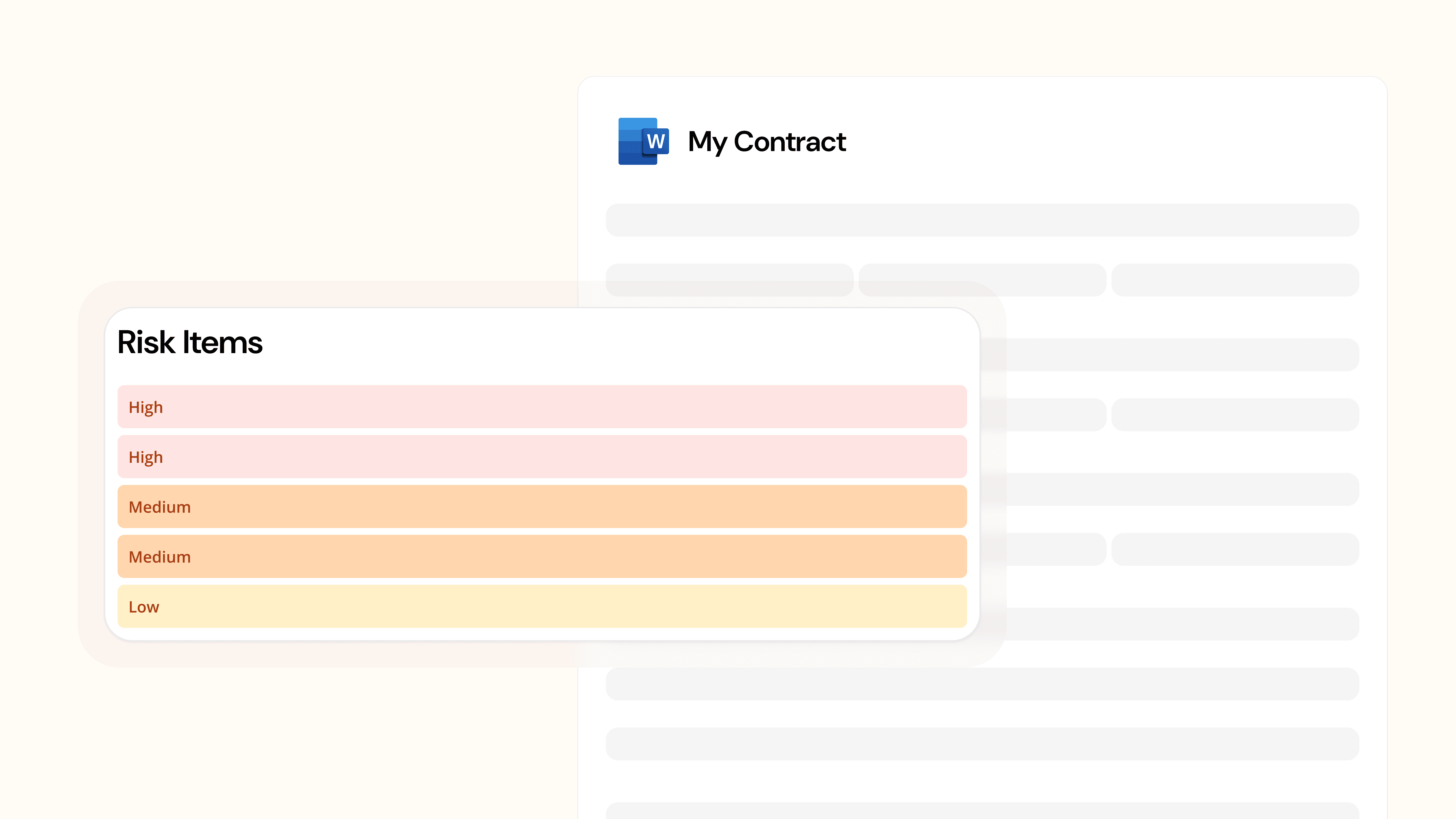
Risk Reports are a faster way to understand what truly matters inside a contract. Instead of reading through pages of dense clauses, you get a clear, prioritised view of the risks that could materially affect your business or your client.
Traditional contract review is often slow, manual, and dependent on senior legal bandwidth. As a result, important risks stay buried in legal language or surface only when it’s too late. Risk Reports shift the focus from reading every line to understanding the implications early, helping teams spend their time on decisions rather than decoding text.
The goal is not to replace legal judgement, but to surface the right issues clearly and at the right moment.
What a Risk Report Identifies

A Risk Report highlights clauses that can create real-world exposure if overlooked.
This includes commercial risks such as unfavourable payment terms, broad termination rights, or disproportionate liability exposure. It also flags legal and compliance risks like missing clauses, non-standard language, or provisions that don’t align with common regulatory expectations.
On the operational side, Risk Reports surface unclear responsibilities, one-sided obligations, and dependencies that could affect execution. They also identify negotiation risks—clauses that weaken leverage or reduce future flexibility. Each issue is categorised and prioritised so attention goes first to what matters most.
How It Works in Minutes
Using a Risk Report is intentionally simple.
You upload or drop a contract, after which the system analyses the clauses and categorises risks based on impact and relevance. The output is a structured, plain-English report that avoids unnecessary legal clutter and focuses on clarity.
Reports can be reviewed on screen, downloaded as a clean summary. Moreover, you can automatically fix risks in your contract and export it in a track-change format for review, sharing, or negotiation workflows.
What Happens Without a Clear Risk View
When contracts are reviewed without a structured risk framework, important issues are easy to miss.
Founders may sign agreements without fully understanding downside exposure. Legal teams spend time reading line by line rather than focusing on high-impact clauses. Risky terms often come to light only during disputes, audits, or renegotiations—when fixing them is far more costly.
Unbalanced or missing provisions can lead to revenue leakage, compliance gaps, operational friction, or prolonged legal disputes that could have been avoided with earlier visibility.
Why This Differs From Generic AI Contract Reviews
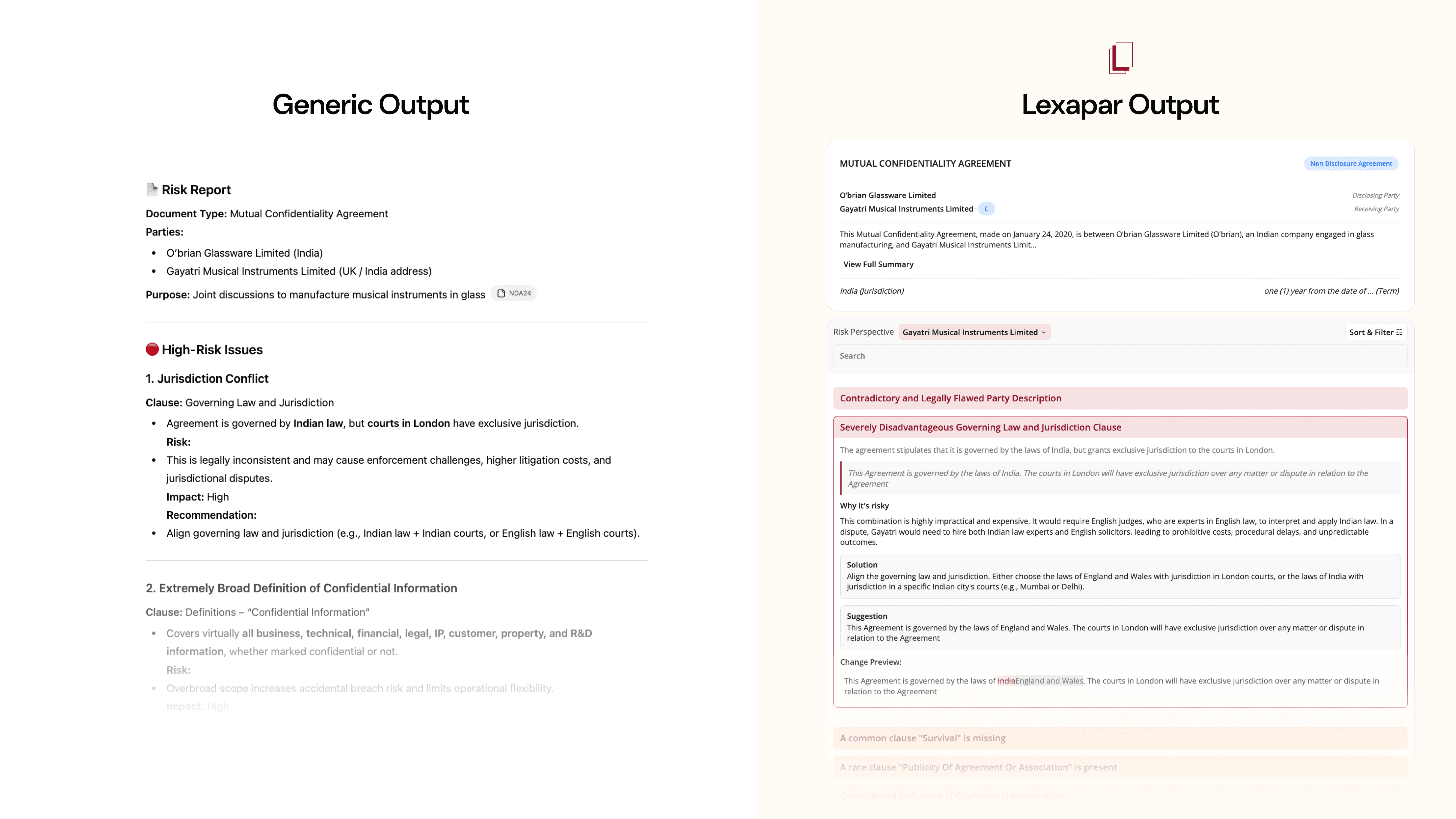
Many AI tools summarise contracts or extract clauses. While useful, this information alone does not support decision-making.
Risk Reports are built around prioritisation, not volume. Instead of showing everything in a contract, they highlight what could go wrong, why it matters, and where attention is required. This combines AI with legal reasoning and context, making it practical for real legal and business workflows.
The intent is to support lawyers and decision-makers—not replace them.
Who Benefits From Risk Reports?
Risk Reports are useful for anyone who needs to make decisions based on contracts.
Founders and CXOs use them for quick clarity before signing. In-house legal teams rely on them to triage contracts and focus effort where risk is highest. Law firms use Risk Reports to speed up first-pass reviews and manage higher volumes efficiently. Business and operations teams benefit from clearer risk visibility without waiting for lengthy explanations.
When to Use Risk Reports
Risk Reports are most valuable before execution or during active negotiations.
They are commonly used for vendor and customer agreements, NDAs, MSAs, SaaS contracts, and other high-volume workflows—especially when timelines are tight and legal bandwidth is limited.
The Outcome: Faster, Safer Decisions
Risk Reports move contract review from slow reading to fast clarity.
What once took hours can be done in minutes. Teams move from uncertainty to informed decision-making, and from reactive problem-solving to proactive risk management.
Closing Thought
If you’re looking for a more efficient way to understand contract risk without cutting corners, Risk Reports offer a practical starting point. They don’t replace legal review—but they make it sharper, faster, and more focused on what truly matters.
Risk Reports are one example of how Lexapar approaches legal work differently—by combining AI-driven analysis with legal context to surface what truly matters, early and clearly. Built for real-world legal and business workflows, Lexapar Risk Reports help teams move faster without sacrificing judgement, accuracy, or control. They offer a practical way to bring structure, prioritisation, and clarity to contract review—especially when time and attention are limited.
Get 3 Free Risk Reports
Reduce repetitive legal work without compromising quality or judgment.
